Jam System

Released December, 2023 in Fortnite by Harmonix / Epic Games

I joined Harmonix only a few months before the studio was acquired by Epic Games in late 2021. As part of Epic, our goal was to bring greater musical expression to the world of Fortnite, with a focus on playful, collaborative social experiences. No guns; only grooves.

From January through September of 2023, I was incredibly proud to be the Design Lead and Product Owner of the Jam System, a unique feature that embedded casual, collaborative music-making into Fortnite’s popular emote system, and allowed players to effortlessly create multiplayer mashups in many places across the Fortnite “metaverse,” including Battle Royale.

Harmonix has made multiple attempts through the years to embed the magic of mashups into a gameplay experience—first with the card game Dropmix in 2017, and later with the DJ simulator Fuser in 2020. Those games are beloved by their devoted fanbases, but neither has the sheer scale of something like Fortnite. With Jam, we had an opportunity to put Harmonix’s incredible mashup technology in front of a massive audience, and see just what sort of mashup mischief they could come up with.

The Jam System is predicated on players purchasing or unlocking songs for use in Fortnite Festival. Each song acquired comes with “jam loops,” which break the track into four 32-bar loops: Bass, Drums, Lead, and Vocals.
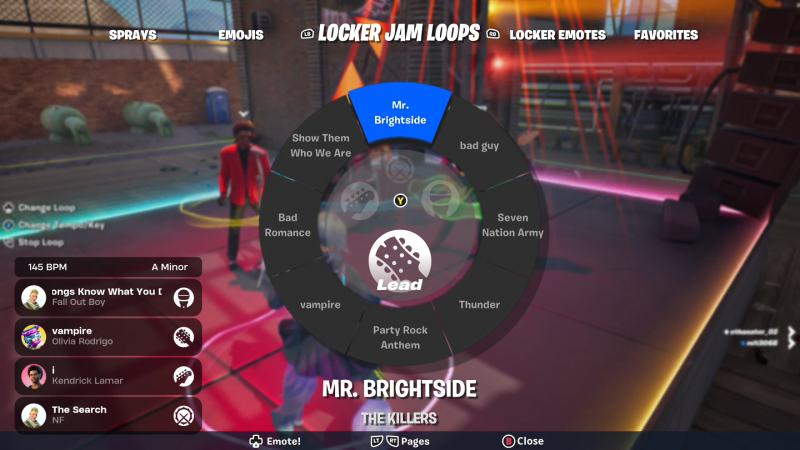
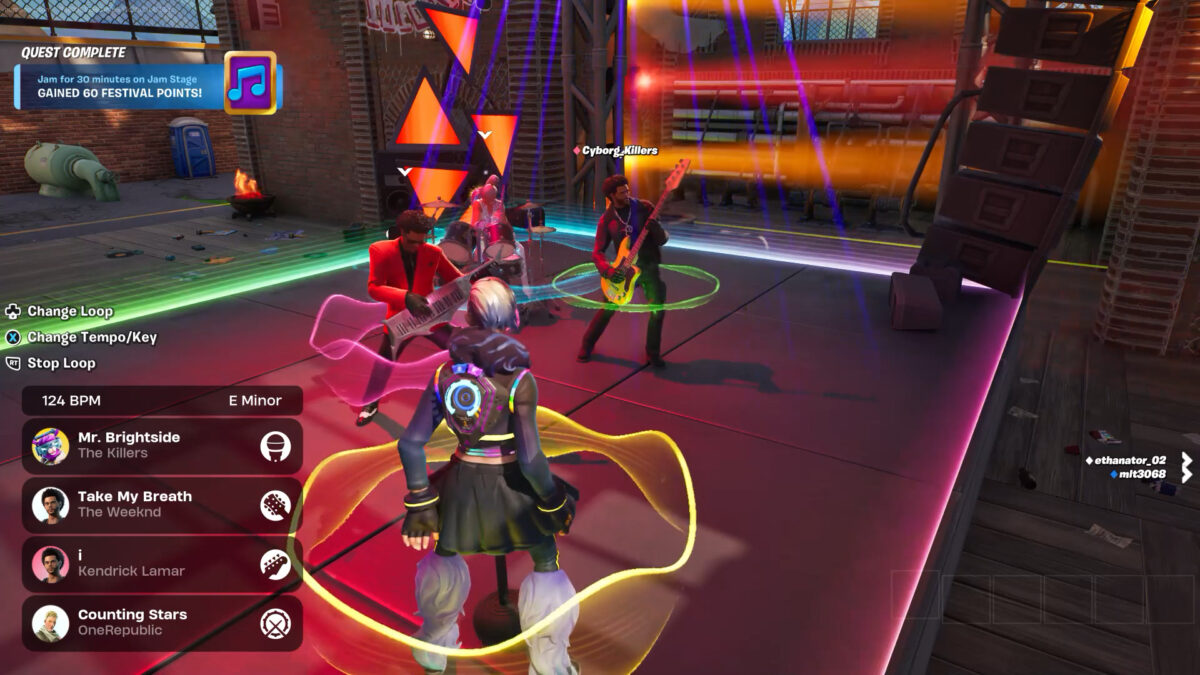
By using the emote wheel, players can select a song and a part (like the bass from Seven Nation Army, or the vocals from Blinding Lights), and their character will bust out the appropriate instrument and start jamming. Up to three other players can join in with their own songs and parts, and the Jam System will sync up the tempo and key for all parts, allowing for even the most cursed mashups to sound better than you’d expect. Players can switch between songs seamlessly, and even tweak the tempo and key as they play to keep the jam fresh.

Where Jam System departs from previous attempts at mashup gameplay is in both the social element, and the lack of game rules dictating the experience.

Each player in a jam session can only play one part at a time, so full four-part mashups require finding other players to jam with. And something truly magical occurs when you get into the groove with three total strangers. Even early playtests had an electricity to them, and our sessions often had me cackling with joy when we’d nail the perfect on-beat transition, or switch back and forth between vocal tracks to create impossible duets. We didn’t have to be in the same room to share that collaborative energy, and the connection between us felt genuine, even if we were communicating through nothing more than loop changes.

Jam is also unique in that it doesn’t try to be a game. There are no points (other than XP earned), and no system dictating what “good” or “bad” play looks like. The incentives for jamming are almost entirely intrinsic. The implicit goal of Jam is to jam well, and create a positive experience for yourself, your fellow jammers, and whoever else is dancing along.

Those who know me, know how much I love mashups. Working for Harmonix had been a dream of mine for as long as I wanted to make games, and I love that a large part of my time with the company was spent helping bring mashups to the masses, and empowering new kinds of social, musical play.
HoloVista

Released September, 2020 on iOS, by Aconite

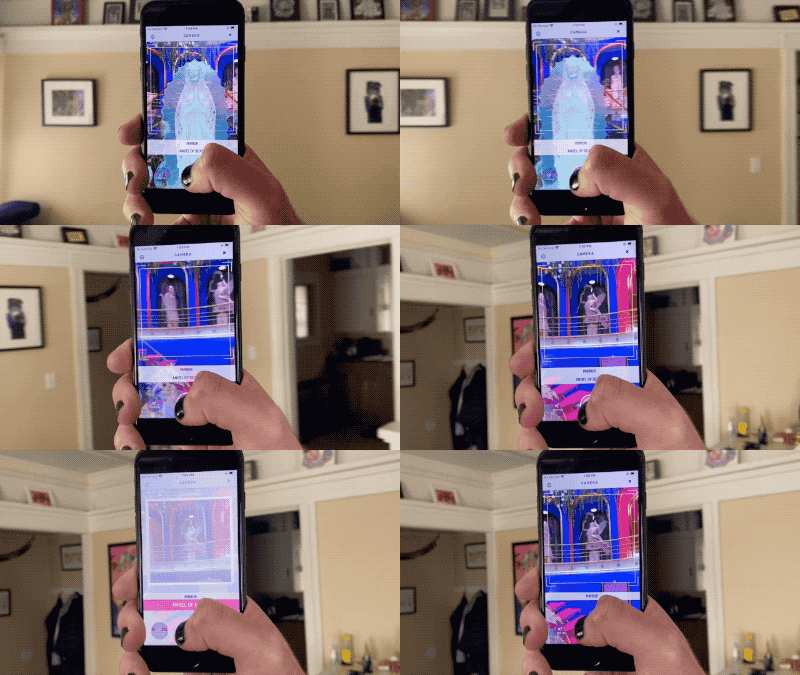
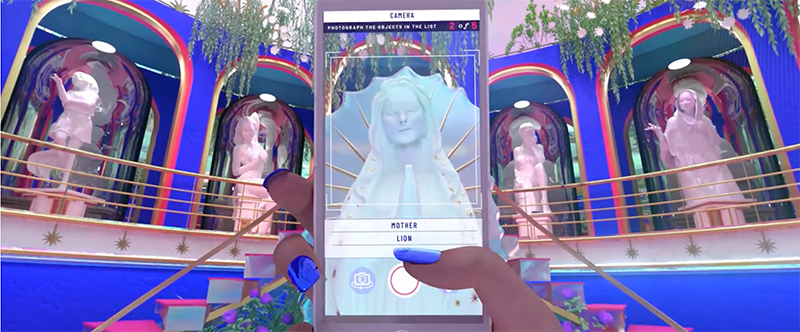
HoloVista is an immersive hidden object and storytelling game, allowing players to experience five days in the life of Carmen Razo through the lens of her phone’s camera and her social media feed.

HoloVista’s Launch Trailer

As Aconite, Star St.Germain and Nadya Lev assembled an exceptional team of engineers, writers, designers, artists and audio folk to create something truly special. My involvement was always in support of their vision, lending my expertise in prototyping, documentation, pre-production planning, and user experience design to help craft and ship an experience we could all be proud of.

You could call HoloVista “a VR game without VR tech.” Rather than requiring a headset, your phone acts as the portal: Opening the camera lets you see into Carmen’s world, where you can photograph objects, post them to her feed, and engage with her friends and family through both public posts and private messages.

The result is an immersive and unique experience that’s still approachable and playable by anyone. The gameplay is casual in nature, allowing for complexity to be expressed through the narrative rather than through the controls and systems.

HoloVista is unlike anything I’ve ever worked on before. It’s been a fascinating and exciting challenge figuring out how to tell a compelling, immersive story while still being a fun, casual game to play. Our unique take on hidden object games is bolstered by an incredible team, with story by Strix Beltrán and Cory O’Brien, art by Blake Kathryn and Andrew Morgan, music by Mariode, and more.

Press

Accolades

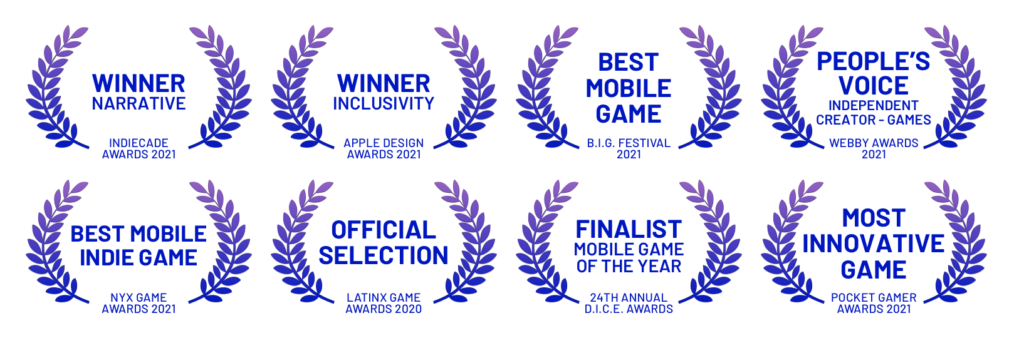
Winner, Inclusivity
2021 Apple Design Awards

Winner, Narrative
2021 IndieCade Awards

People’s Voice: Independent Creator – Games
The Webby Awards 2021

Finalist, Mobile Game of the Year
24th Annual D.I.C.E. Awards

Most Innovative Game
Pocket Gamer Awards 2021

Official Selection
Latinx Game Awards 2020

Best Indie Game, Mobile
Best Art Direction, Mobile
Best VR/AR Game, Mobile
Best Music, Mobile

2021 NYX Game Awards

Boulder Goat

Released May, 2015 on iOS (Canada only), PopCap/EA

While at PopCap, I spent 2 years as a designer within the PopLabs prototyping group, where I worked with the talented Jason Hamilton to rapidly develop new game concepts. Over a period of roughly 17 months we developed four highly playable — and, dare I say, fun — game prototypes. The fourth was Boulder Goat, which was soft-launched in Canada after only an additional 5 months in production, with a core team of only 10 (highly talented) people.

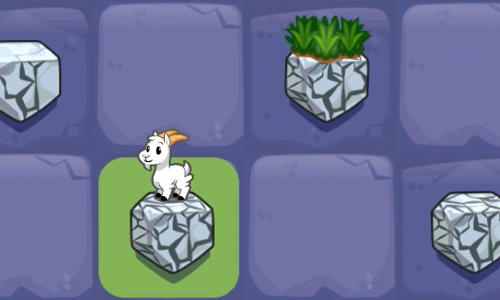
Boulder Goat stars the eponymous protagonist — once the loneliest goat at the bottom of the lowest valley — as they set out to realize their dream of finding new friends, and climbing every mountain. The gameplay was inspired by the puzzle-like qualities of indoor climbing, as well as the “mastery through failure” model of games like Terry Cavanagh’s VVVVVV and Super Hexagon. There’s even a bit of DDR in there for good measure.

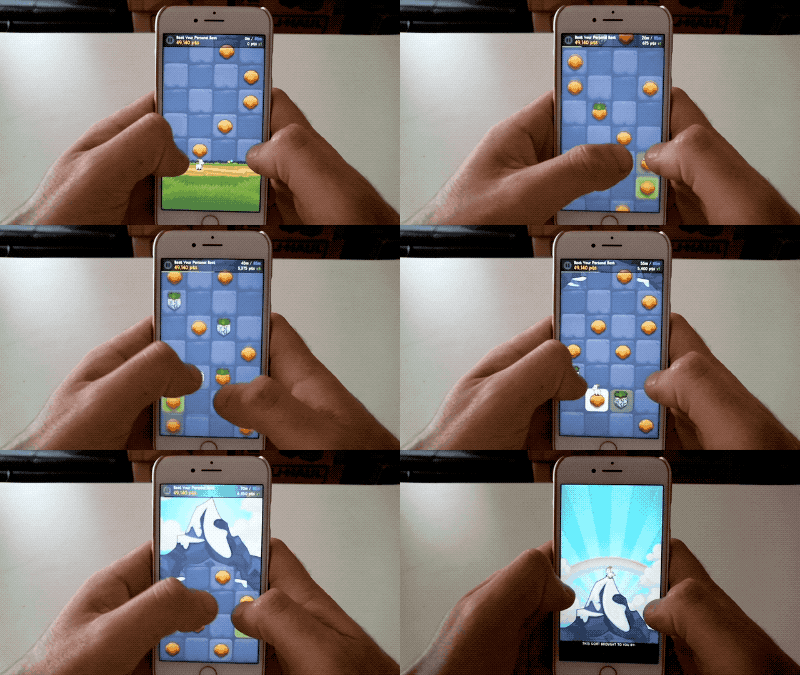
We designed for the phone first, wanting a mechanic that was no more difficult to execute than typing on a virtual keyboard. We also wanted the game to be playable one-handed (for when you’re waiting in a line or standing on a bus). Boulder Goat’s levels are grid-based as a result, never getting any wider than four across to keep all the board elements large and tappable.

(Because of this design, Boulder Goat is actually a very “stealth” game; when you’re playing, to others it just looks like you’re typing.)

Boulder Goat was designed to be incredibly easy to learn, and our user testing showed that players were able to quickly understand the conventions of the game without any real textual instruction. The result was a challenging game which was satisfying to learn, and a memorable project for the entire team.

Roles: lead designer, user experience designer, game designer, writer

Plants vs. Zombies Adventures

Released May 2013 on Facebook, by PopCap/EA

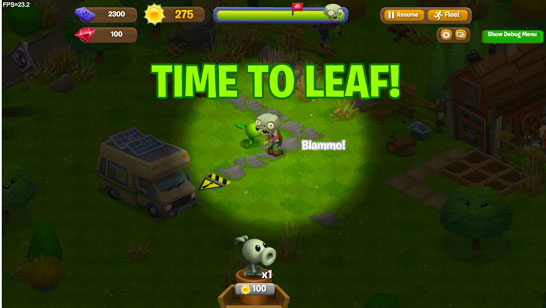
Plants vs. Zombies Adventures manages to retain the core essence of the original game, while adding tons of fun new twists and gameplay alterations to always keep things fresh and interesting.

GameZebo

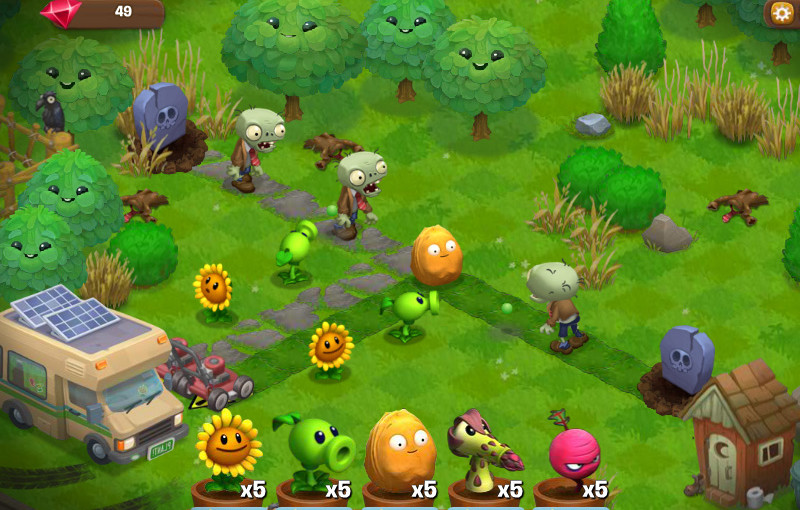
Plants vs. Zombies Adventures represented an ambitious challenge for the PopCap San Francisco studio: recreate the charm of the original Plants vs. Zombies in a new Facebook title that took advantage of the platform’s social features. The resulting game was a unique spin on the series’ tower-defense formula, pitting beautiful 3D plants against adorably menacing zombies, with an art style that felt almost handmade, giving the game a unique look and voice on Facebook.

Plants Vs. Zombies Adventures Trailer

Though it succeeded critically, PvZ Adventures ultimately failed to capture enough interest from the Facebook audience to sustain ongoing development. For those who had the chance to play it, Adventures was a charming, humorous world full of life and character, and the product of an amazingly talented team of people doing some of their best work.

Roles: game designer, user experience designer, writer

Press:

Bad Games

In 2012 I ended up struggling with a bit of depression, having tied my sense of self-worth to my creative and professional output. It can take years to make a game within a large company, and I realized I needed to be making more games to feel like I was not stagnating as a creator. So I started the Bad Games tumblr, with the tagline “I’d rather make bad games now than good games eventually.”

By pre-qualifying all games on the site as “bad”, it was easier for me to quickly execute on each one. Surprisingly, some folks in the mainstream games press took notice, and the project got covered in a few places.

Some Bad Games:

Press Coverage:

Gardens of Time

Released April 2011 on Facebook, by Playdom / Disney

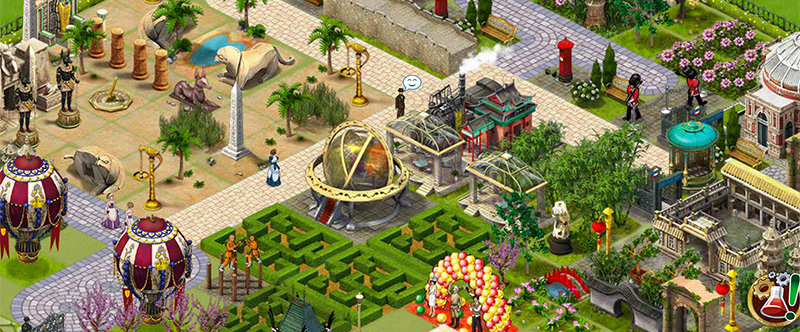
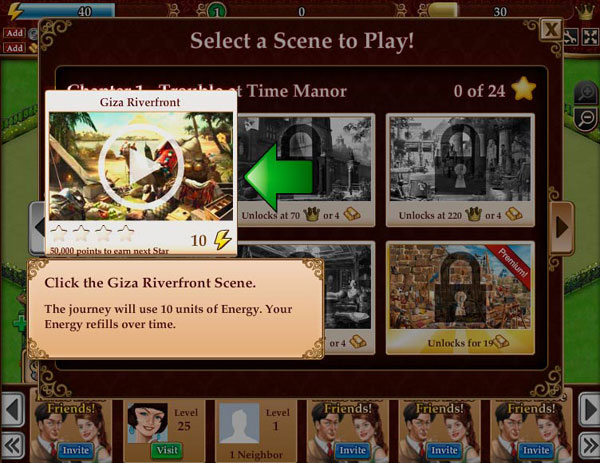
After shipping City of Wonder, I joined a team challenged with bringing the popular Hidden Object genre of casual games to Facebook. We exceeded all expectations with Gardens of Time, a massive critical and commercial success for Playdom that proved the validity of the genre on social networks.

Gardens of Time Trailer

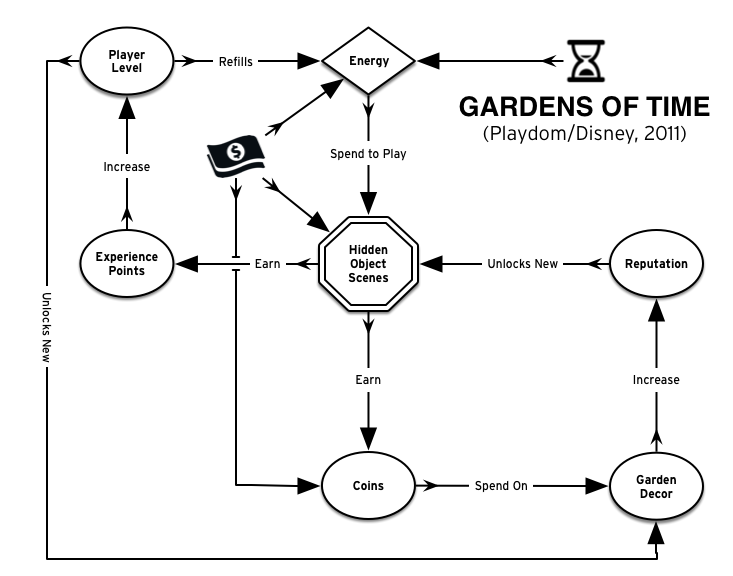
My contributions to Gardens of Time were varied. I helped redesign the core loop of the game (specifically, the relationship between completing hidden object scenes and decorating your garden), massaged a great deal of the user experience with the help of an excellent UI designer, and crafted some innovative social features which I’m proud to say that our competitors saw fit to copy. I also wrote the first ten chapters of the game’s story — a soap opera-esque tale of corruption and romance across time and space.

Gardens of Time peaked at just over 4 million daily active users (then a new record for Playdom), and an astonishing 17M monthly active users. The title was also honored by receiving the “Best Social Network Game” award at the 2011 GDC Online Choice Awards. I’m incredibly proud of this game, and all of Studio 24 for making it as incredible as it is.

Roles: game designer, user experience designer, writer

Press:

Systems Flow:

City of Wonder

Released August 2010 on Facebook, by Playdom
Roles: game designer, user experience designer, writer

My first shipped title at Playdom was City of Wonder, a city-building social game that took the engine and core mechanics from Social City and added a casual tech tree, several eccentric characters, PVP,  and an ever-evolving adventure through the ages of time — starting in the stone age and expanding through the modern era and beyond. City of Wonder was a record-breaking success at Playdom, reaching over 1 million players a day, and over 10 million every month.

 Press:

Café World

Cafe WorldReleased September 2009 on Facebook, by Zynga
Roles: game designer, user experience designer

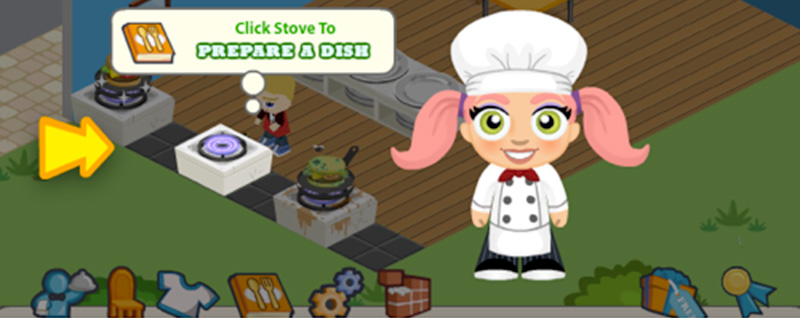
My final project at Zynga was the cooking/restaurant simulation Café World, at one point the fastest growing game in Facebook’s history with five million daily active users within one week of launching. I worked in collaboration with a dedicated group of designers, engineers, artists and producers, without whom this project wouldn’t have been possible.

I left Zynga before Café World shipped, but I still feel proud of my contributions to the game’s collaborative development, the most significant of which being the core mechanic of the stove-based cooking timers (the prototype of which was appropriately titled “Romancing the Stove”).

Press:

Scramble Live

Released March 2009 on iPhone and iPod touch by Zynga
Roles: lead designer, user experience designer

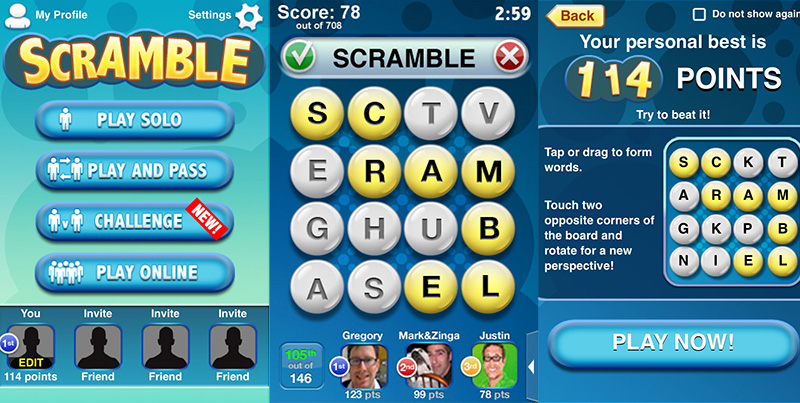
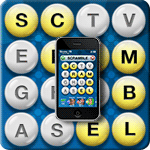
At Zynga, I was given the challenge of bringing the excellent Facebook game Scramble to the iPhone and iPod touch. The final product — rapidly developed with a small, phenomenal team — exceeded internal expectations, and has remained a fan favorite, with new versions persisting to this day (now under the name Word Streak with Friends). The original Scramble Live featured a super-competitive live mode, as well as asynchronous challenges against friends, solo play, and the single-device “Play & Pass” mode. The game synced with your Facebook account, sharing top scores and other stats like each players’ longest word.

For more information about my design work on the game, please check out my post Designing Scramble Live

Escapist Games

In the summer of 2008 I started a contract designing monthly non-digital games for Escapist Magazine, complete with write-ups of my design process. The Game Design Friday series gave me an opportunity to hone my design craft, while creating a bevy of weird little games — many of which I’m still quite proud of.

Magic Numbers

A basic dice game for two or more players, with a minor bluffing mechanic and the ability to “give” your roll to another player, sometimes with unintentional results. (Published July 2007)

Officeball

Less a proper game, and more a core mechanic, Officeball is designed to be a casual, subtle game of possession played in a corporate atmosphere. (Published August 2007)

ARROWGAMÉ

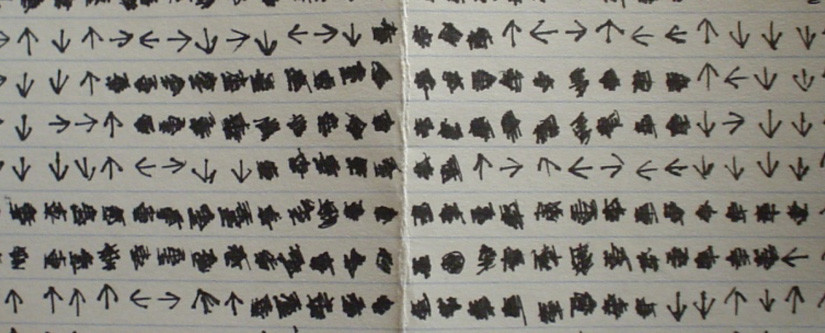
A personal favorite of mine, ARROWGAMÉ is a two-player game played on a single index card. The result of gameplay is a somewhat beautiful arrow-laden battlefield. I even wrote a haiku about it! (Published September 2007)

The Filler

The Filler is about the fictitious yet grueling job of pouring cement into graves to prevent zombie uprisings. One player plays the woeful titular character, and the other the undead hordes trying to rise from their concretized tombs. (Published October 2007)

9am Class

A board and dice game about staying awake during an early-morning college class. (Published November 2007)

Fictionless

A board game that played with allowing players to use their dice rolls to either move, or bank the rolled value to pass gates on the board. (Published December 2007)

Petrol Panic

A two-part Game Design Friday entry, Petrol Panic was an attempt at building the mechanic of Fictionless into a more fully-fledged board game, complete with a dystopian gas-siphoning mechanic. (Published February 2008)

Gygaxian

Created to honor the memory of designer Gary Gygax — who had then recently passed — Gygaxian is a storytelling game for one player and three competing Game Gods. (Published April 2008)

myNo

Combining the real-time pattern recognition of Set, the rolling and scoring of Yahtzee, and the fast-paced momentum of Pounce, myNo is a small dice game designed for two to six people, and playable in under 20 minutes. (Published April 2008)

You Have to Lock the Entry!

A competitive card game about fighting over Wikipedia edits. (Published May 2008)

Turfy

On the elementary school playground, it’s kill or be killed. Do or die. Win, or go back inside. Compete for control of the jungle gym in Turfy, a “Risky” game of single-territory warfare. (Published August 2008)

omg hire me

Oh noes! You’re out of school and now you need to enter the real world! Build a resume and get on those job sites! omg hire me is an ode to the stressful, cyclical process of trying to get hired out of college. (Published August 2008)

area/code projects

1914702_173320191487_4592722_nIn the summers of 2006 and 2007 I had the opportunity to intern with area/code, an incredibly unique game design shop that explored the intersection of digital games and the real world through a wide range of projects. During my time, I was privileged to work alongside Frank Lantz, Kevin Slavin, Kati London, Kevin Cancienne, Mark Heggen, Dennis Crowley and Chris Paretti on a handful of really inspiring projects.
Chain Factor

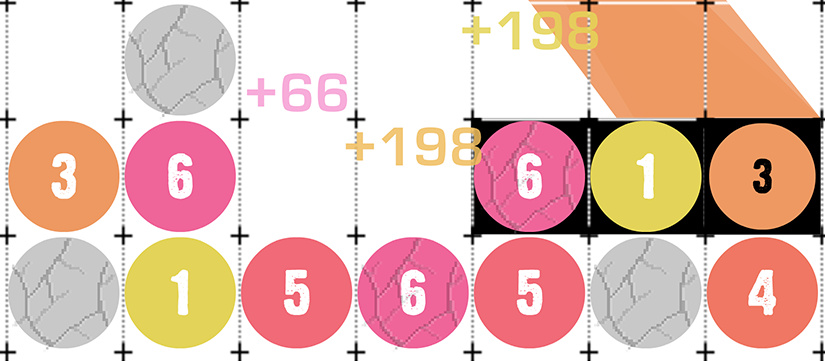
While working with area/code in New York City, I contributed to the design of the ARG Primacy (built for the CBS show NUMB3RS), and its casual game offshoot, Chain Factor. The flash game was intended to combine the simple arithmetic joys of Sudoku with casual blockbusters like Bejeweled. area/code later took this same design to the iPhone with Drop7, which has been critically acclaimed as one of the best titles available for the platform.

Sharkrunners

sharkrunnersSqAs part of Discovery Channel’s Shark Week, area/code developed a real-time exploration game that used real-world data. Sharkrunners allowed players to crew virtual research vessels to observe and research actual sharks being tracked in the ocean. Cell phone alerts would inform players when their virtual ships were close to the sharks, prompting them to log online and engage in observation missions. I contributed to the project by writing a great deal of the creative copy that appears in-game, as well as playtesting. I even appear in the game as disposable crew member Jon!
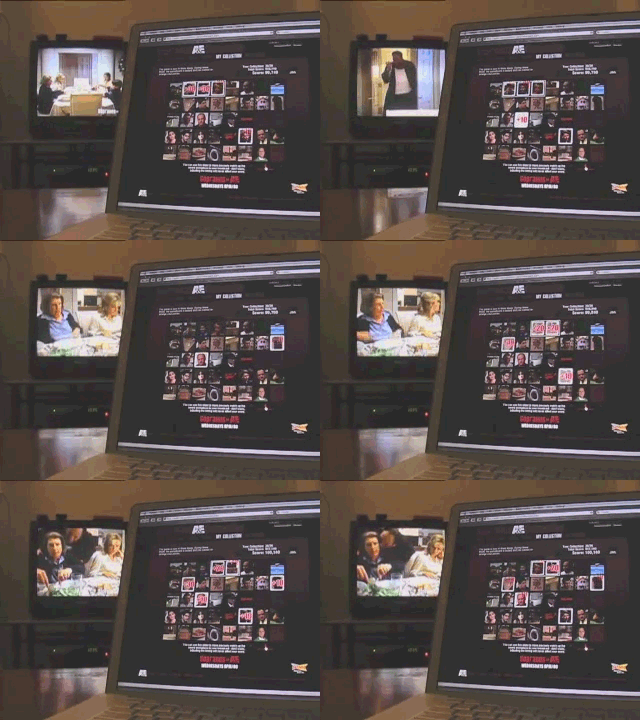
The Sopranos A&E Connection

sopranosconnectionarea/code had a fascination with how real-world events could engage and interact with digital systems. Several of their projects focused on live television, but the earliest was The Sopranos Connection game, made to promote the syndication of The Sopranos on A&E. Ads for the show’s debut on A&E could be photographed with cameraphones to collect game pieces, which could be arranged on a grid. During each episode, characters who appear will cause pieces you’ve collected to light up and earn points, with bonus points going to adjacent pieces appearing onscreen at the same time. I spent most of my time on this project photoshopping all the board elements, but I was grateful to just be in the room for most of the game’s design discussions.